Opening, where do the biggest mistakes really happen?
Most people assume the biggest antique mistakes happen at auction. They don't. They happen long before an item reaches a saleroom, in homes, garages, lofts, charity shop boxes and house clearances. And almost always with the very best intentions.
Introduction
One of the advantages of spending decades around antiques is that eventually you see almost everything. Wonderful discoveries. Extraordinary collections. Objects that have survived centuries. But you also see mistakes, some small, some expensive, some genuinely heartbreaking. And nearly all of them were avoidable.
I want to share the most common and costly mistakes I've watched people make over forty years. Not so you can laugh at them, so you can avoid making them yourself.
Mistake 1, Throwing away what looks ordinary
Valuable items rarely announce themselves.
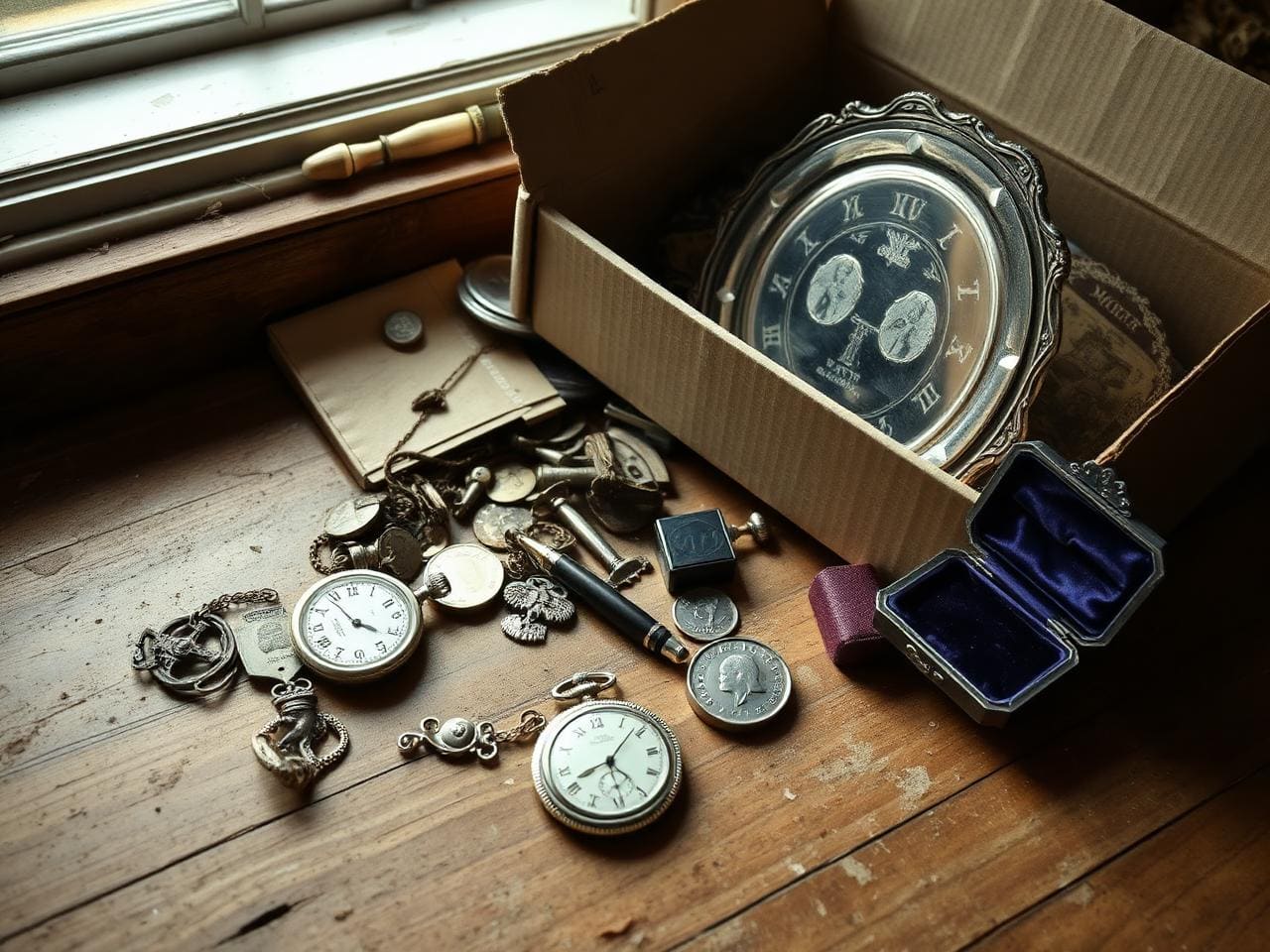
One of the biggest misconceptions in antiques is that valuable objects look valuable. Many don't. A small medal. A pocket watch. A fountain pen. A sovereign. A seemingly ordinary piece of jewellery. The lesson is simple: never assume, always investigate.
Mistake 2, Cleaning an antique before understanding it
People believe cleaning increases value. Far more often, it destroys it. Silver, coins, furniture, watches, military items, every category has its own original surface, its own patina, its own collector expectation. A few minutes with a polishing cloth can wipe out a century of value. Understand first. Clean later, if at all.
Mistake 3, Trusting labels instead of evidence
A label says Georgian. Or Victorian. Or rare. Or museum quality. Always ask: who wrote it, when, and why? Evidence first. Labels second. A handwritten attribution from 1962 is interesting, but it isn't proof.
Mistake 4, Falling in love too quickly
Excitement is expensive.
The moment emotion takes over, judgement weakens. This is why professionals slow down. Research. Verify. Think. Then buy. The object you want today will almost always still be available tomorrow, and if it isn't, another like it will appear soon enough.
Mistake 5, Buying the story
People love stories. Forgers know this. A great provenance tale can sell a mediocre object for many times its real value. The rule: the item matters, the evidence matters, and the story comes last, not first.
Mistake 6, Ignoring genuine provenance
The opposite mistake. Letters, receipts, photographs, ownership records, these often get separated from their objects during house clearances and inheritances. People throw them away because they look like clutter. Genuine provenance can double or triple an object's value. Keep the paperwork with the piece.
Mistake 7, Looking at age instead of demand
Old doesn't automatically mean valuable. There are Roman objects worth less than a 1990s wristwatch. Victorian furniture has fallen in price for two decades. Modern collectables routinely outperform pieces three centuries older. Demand drives value, not age alone.
Mistake 8, Restoring something beyond recognition
Over-polished silver. Over-restored furniture. Refinished watches. Repainted ceramics. Each of those phrases describes value being removed, not added. With antiques, less is usually more.
Mistake 9, Selling too quickly
Many inheritors sell immediately, without research, comparison, advice or proper valuation. The pressure to "just be done with it" is one of the biggest destroyers of value in the entire trade. Slow down. A month of patience can change everything.
Mistake 10, Assuming dealers know everything
Good dealers keep learning. Expertise is a process, not a destination.
After forty years I'm still learning. Anyone who tells you they know it all is the person you should trust least. Real expertise is comfortable saying "I don't know, let me check."
Mistake 11, Ignoring condition
Tiny damage. Huge value difference. A hairline crack on a Worcester teapot. A polished-out hallmark on Georgian silver. A replaced dial on a vintage Rolex. Each can cut value by half or more. Condition is never a minor footnote.
Mistake 12, Believing the internet without verification
Google. Facebook groups. Marketplace descriptions. AI summaries. Auction listings. None of them are automatically correct. Treat every online source as a starting point, not a conclusion. Cross-check against auction archives, museum records and reference books before you act on what you've read.
Mistake 13, Buying outside your knowledge zone
Many of the biggest losses I've seen happened because someone bought something they didn't really understand. The lesson: specialisation creates confidence. Stay narrow until you've earned the right to go wider.
Mistake 14, Missing the collection
Many people evaluate individual items. Dealers often evaluate whole collections. Sometimes the collection, assembled with knowledge, completeness and theme, is worth far more than the sum of its parts. Break it up and the premium disappears.
Mistake 15, Walking past opportunity
The opposite mistake to over-confidence. Some people are so frightened of getting it wrong that they stop acting at all. Good collecting needs curiosity, research, action and balance. Inaction has a cost too.
The most expensive lesson of all
Certainty is rare. The best dealers aren't always right, they simply make fewer mistakes.
Over and over again. That's the whole craft.
Interactive exercise, name the mistake
Five quick scenarios. For each one, identify which mistake from this lesson is being made.
Scenario 1
An inheritor polishes a tarnished Georgian coffee pot until it shines like new before taking it to auction. → Cleaning before understanding.
Scenario 2
A Victorian chair is stripped, re-stained and re-upholstered in modern fabric. → Restoring beyond recognition.
Scenario 3
A buyer pays a premium for a watch because the seller claims it once belonged to a famous racing driver, no paperwork. → Buying the story.
Scenario 4
A family throws out an old envelope of receipts and letters that came with a piece of silver. → Ignoring provenance.
Scenario 5
An estate is cleared and the entire contents auctioned within a fortnight of the funeral. → Selling too quickly.
Final thoughts from Eric
If I've learned anything in forty years around antiques, it's that most expensive mistakes don't happen because people are foolish. They happen because people are human. We get excited. We rush. We assume. We trust too quickly.
The goal isn't perfection. The goal is developing habits that protect you from the mistakes that cost the most. Every collector will make mistakes. Every dealer will make mistakes. Every expert has made mistakes. The difference is whether you learn from them, and if this lesson helps you avoid even one expensive error, then it's been worth teaching.
Key takeaways
- Most costly mistakes happen before an item reaches auction, not after.
- Valuable items rarely announce themselves. Investigate everything.
- Never clean before you understand. Patina and original surface drive value.
- Trust evidence over labels, stories and online opinion.
- Excitement is expensive, slow down before every significant purchase.
- Keep paperwork with the object. Genuine provenance is real money.
- Old doesn't equal valuable. Demand drives price.
- Don't sell estates in a rush, patience pays.
- Stay inside your knowledge zone until you've earned the right to widen it.
- The best dealers verify, research, compare and question, relentlessly.
Questions About This Lesson?
Leave a comment, ask Eric a follow-up question, or suggest a future lesson. Approved comments appear below to help the wider learning community.